
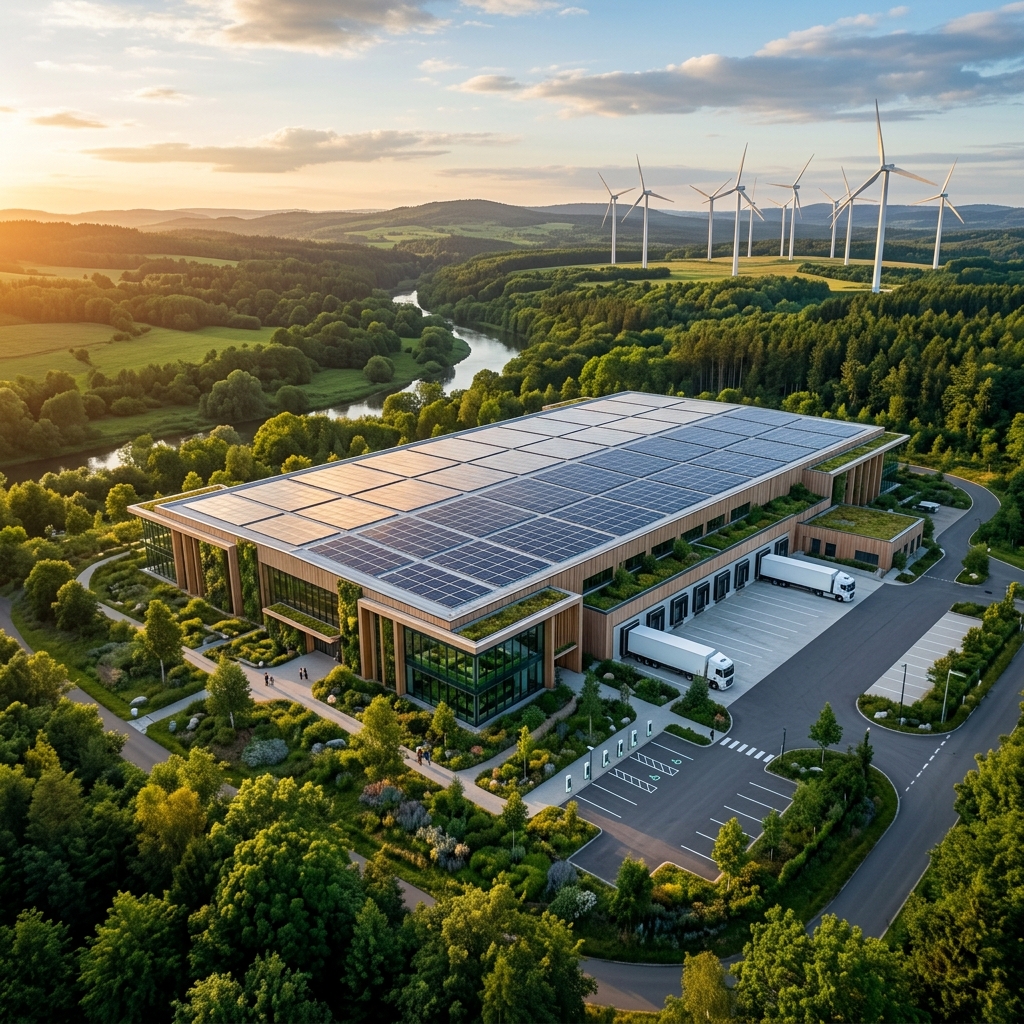
The Refrigerant Transition.
We Are Already There.
While the industry plans its migration from HFCs, Cueron is already manufacturing systems with natural and ultra-low-GWP refrigerants i.e., engineering for the regulatory trajectory, not just today's compliance baseline.
From HFCs to Natural Refrigerants.
The global refrigerant transition i.e., driven by the Montreal Protocol and Kigali Amendment i.e., is reshaping the industry. Here is where we have been, where we are, and where we are going.
Our Eco-Technology Platform.
Natural Refrigerant Engineering
System design optimized for natural refrigerants i.e., safety engineering for flammable (A3) refrigerants per IEC 60335-2-89, high-pressure CO₂ systems, and ammonia-water absorption cycles.
Ozone-Safe Insulation
Zero-ODP blowing agents for polyurethane and polyisocyanurate insulation i.e., transitioning from HFC-245fa to hydrocarbon and water-blown formulations.
Refrigerant Lifecycle Management
End-to-end refrigerant stewardship i.e., from procurement and charging to recovery, reclamation, and responsible disposal at equipment end-of-life.
Measurable Environmental Impact.
Ammonia-Based Treatment of High-Strength Industrial Effluent
Engineered and delivered by Cueron - two-stage ammonia stripping and biological nitrogen removal retrofit at a nitrogenous fertilizer & specialty chemicals complex, achieving full CPCB compliance and resource recovery.
Executive Summary
Continental NitroChem's ETP received ammonia-laden streams with NH₃-N far exceeding CPCB discharge limits, under increasing OCEMS enforcement scrutiny.
A two-stage retrofit: physico-chemical air stripping with ammonium sulphate recovery, followed by biological nitrification-denitrification polishing.
90-Day Sampling Design Basis
Combined average flow: 1,150–1,250 m³/day. Sources: process condensate, scrubber blowdown, ion-exchange regeneration, and stripper drains.
Technology Screening
Air / Steam Stripping
Counter-current packed tower at pH 10.5–11 and 55–65°C. 70–95% NH₃-N removal. Warm, alkaline influent reduces energy and caustic demand. NH₃ recoverable as ammonium sulphate.
Biological Nitrification-Denitrification
>90% removal achievable. Inhibited above ~500 mg/L free ammonia - not viable standalone, but ideal after stripping reduces concentration.
Ion Exchange
High TDS (3,800–6,200 mg/L) causes rapid resin fouling. Pilot trials confirmed unsuitability as primary stage.
Breakpoint Chlorination / Struvite MAP
Chlorination: high chemical cost and chlorinated by-product risk. Struvite: phosphate-poor effluent makes reagent dosing uneconomical.
Key Equipment & Design Parameters
All equipment rated for continuous 24/7 operation at a peak hydraulic load of 50 m³/hr and design NH₃-N influent of 1,800 mg/L.
Verified Performance
60-day integrated commissioning run. Overall NH₃-N removal exceeded 98%.
Cost Summary
210–230 t/yr ammonium sulphate recovered offsets OPEX. Simple payback: 3–4 years.
Operational Challenges
Managed through quarterly acid-wash cycles and a higher self-cleaning packing geometry.
NH₃ spikes >500 mg/L suppressed nitrifiers. Mitigated by increasing equalization HRT and an automatic feed-throttle interlock.
Largest reagent cost. Reduced by routing only high-demand streams through the pH-lift step, lowering overall NaOH usage.
Lessons Learned
Stripping for high-strength streams; biological N/DN most cost-effective after concentration is reduced.
Adequate HRT upstream prevents ammonia spikes from inhibiting downstream biology.
Bench trials identified rapid ion-exchange resin fouling on high-TDS streams, avoiding a costly dead end.
Ammonium sulphate recovery economics should be evaluated alongside the compliance case, not after.
Automatic feed throttles tied to upstream NH₃-N protected the bioreactor more reliably than manual intervention.
Bio-augmentation with seed sludge and gradual loading ramp-up materially shortens commissioning vs. a cold start.
Discuss Your Refrigerant Strategy.
Whether you are planning a new installation or evaluating a refrigerant conversion for existing equipment, our team can model the environmental and economic implications.
Talk to Eco-Technology Team